
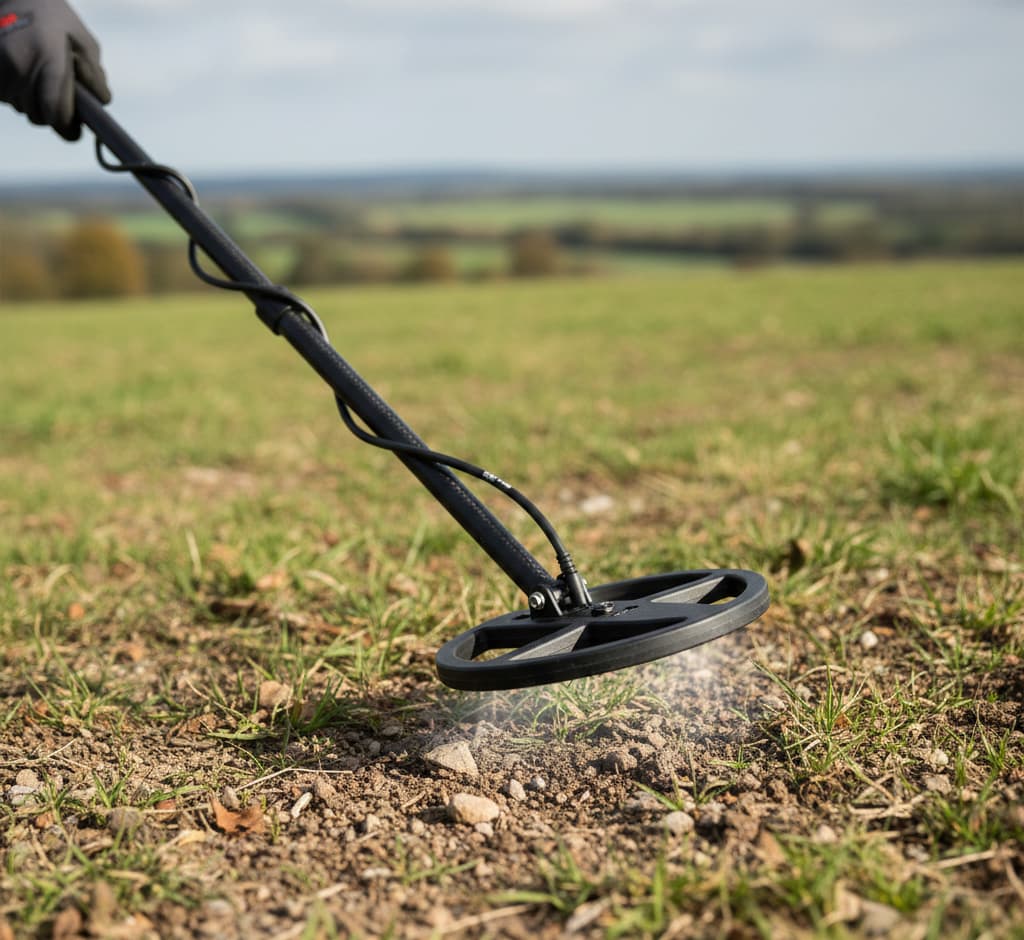
The search coil is the part of a metal detector that actually “sees” what is hidden beneath the ground. While many beginners focus on depth, settings, or brand names, the search coil is the component that sends and receives the signal that makes detection possible in the first place.
Every time you swing your detector, the search coil transmits an electromagnetic field into the soil and listens for changes caused by metal objects. How clearly that signal is sent and interpreted has a direct impact on detection depth, target accuracy, and how stable your detector feels during use.
Because of this, the search coil plays a much bigger role than most people realize. Many common frustrations—false signals, inconsistent readings, or missing good targets—are not caused by the detector itself, but by misunderstanding how the search coil works and how it should be used.
In this guide, we’ll explain what the search coil does, why it is one of the most important parts of a metal detector, and the most common mistakes people make when using it.
What Does a Metal Detector Search Coil Do?
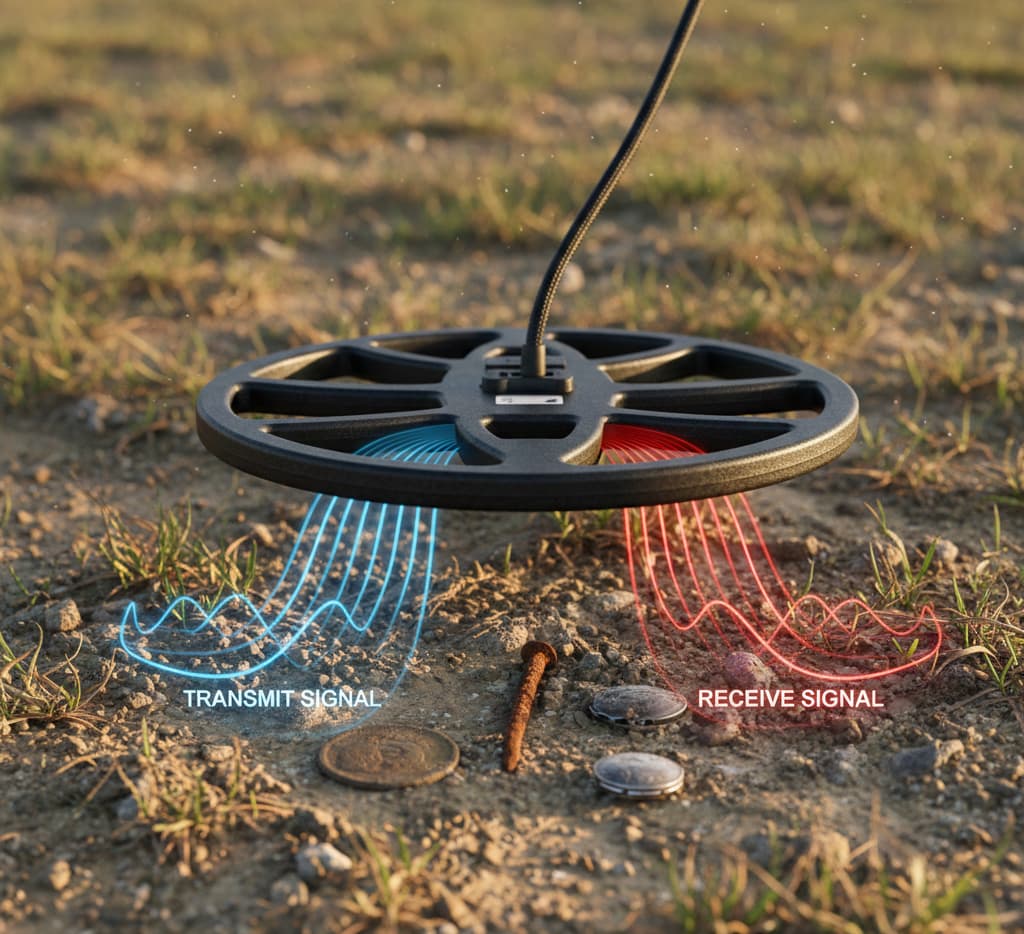
The metal detector search coil is responsible for creating and detecting the signal that allows the detector to identify buried metal objects. Without the search coil, a metal detector would have no way to transmit energy into the ground or receive information back from hidden targets.
When the detector is turned on, the search coil generates an electromagnetic field that penetrates the soil beneath it. As this field moves through the ground, it interacts with anything conductive, such as coins, jewelry, relics, or other metal objects. When metal is present, the electromagnetic field is disturbed, and this disturbance is detected by the search coil.
The search coil then sends this information back to the detector’s control box, where the signal is processed and converted into an audible tone or visual indication. This entire process happens continuously as you sweep the coil across the ground, allowing the detector to “scan” the area in real time.
Because the search coil both transmits and receives the signal, its design and behavior directly influence how clearly metal targets are detected. Factors such as how evenly the coil moves over the ground and how consistently it maintains contact with the soil can affect how accurately the detector interprets signals.
In simple terms, the search coil acts as the detector’s interface with the ground. It is the component that connects the electronics of the detector to what is actually happening beneath the surface.
Why the Search Coil Is One of the Most Important Parts of a Metal Detector
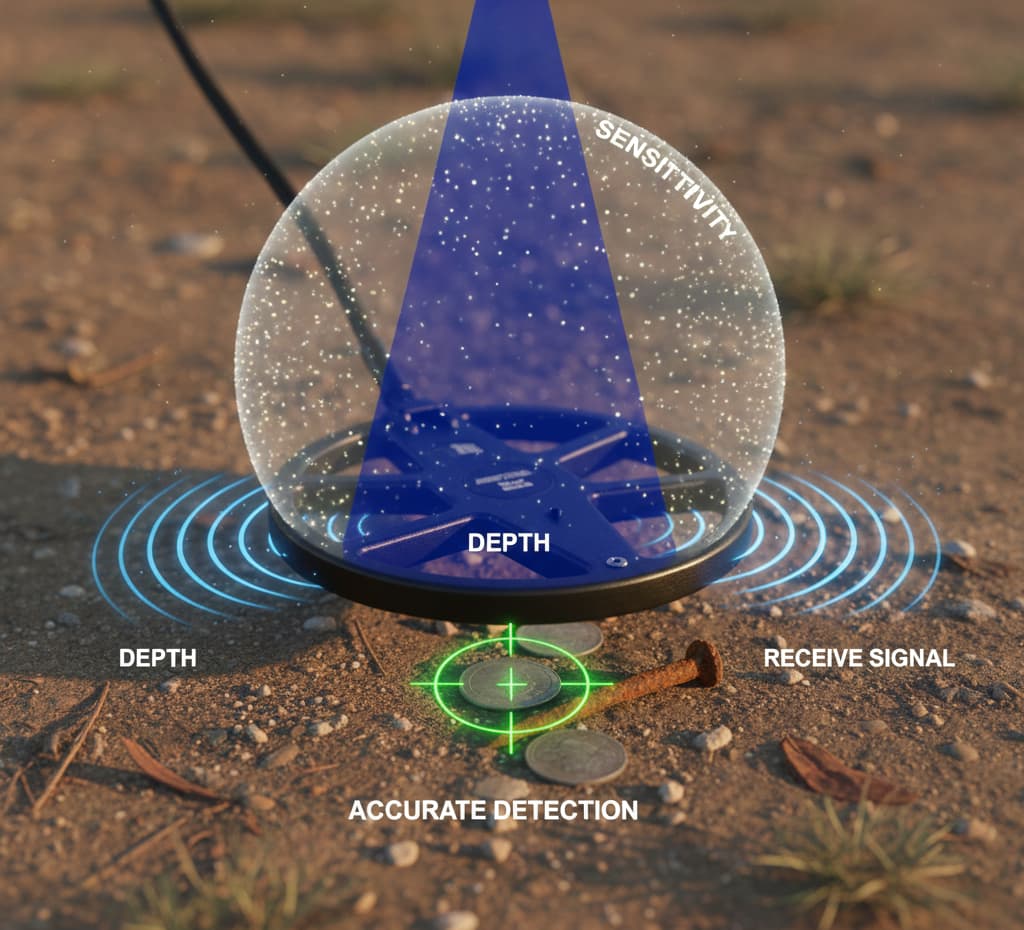
The search coil is one of the most important parts of a metal detector because it is the component that connects the machine to the ground. The control box can process signals, adjust sensitivity, and apply filters, but none of that matters if the signal coming from the ground is weak, unstable, or inconsistent. In real detecting conditions, the quality of what the detector “hears” starts with what the coil can transmit and receive.
One of the biggest reasons the search coil matters is detection depth. Many people assume depth comes mainly from the detector’s power or settings, but depth is heavily influenced by how effectively the coil sends an electromagnetic field into the soil and how well it can receive a clear response back from a target. If the coil is not producing a consistent field, or if the return signal is not being captured cleanly, the detector will struggle to recognize deeper targets. This is why coil behavior can make the difference between a clear repeatable signal and a weak, broken response that gets ignored.
The search coil also plays a major role in target clarity. In theory, the detector identifies targets by analyzing the signal response, but in practice the response has to be clean enough to interpret. A stable coil helps deliver a smoother and more readable signal, which makes target identification more reliable. When the signal is more consistent, the detector’s tones are less jumpy, the ID numbers are more stable, and it becomes easier to decide whether something is worth digging. This matters not only for beginners, but for experienced detectorists as well—because clear signals save time and prevent unnecessary digging.
Another reason the coil is so important is separation—how well the detector can “see” a good target near trash. Real sites rarely contain just one object. Parks, old house sites, beaches, and trails often have multiple pieces of metal close together. The coil’s ability to pick up and transmit signal changes cleanly affects how well the detector can separate targets instead of blending them into one confusing response. Even without going deep into coil types, this is a core reason why a detector can feel “sharp” in trashy ground or, on the other hand, feel like it constantly gives messy signals.
The search coil also affects overall stability in different ground conditions. Soil is not consistent—mineralization, wetness, rocks, and even small changes in terrain can influence the way signals behave. When coil movement is controlled and steady, the detector receives a more predictable stream of information. That allows the electronics to do their job properly instead of reacting to random spikes and noise. This is one of the reasons a detector can feel smooth and easy to use for one person, but unstable and frustrating for another, even with the same model and settings.
Because the search coil affects depth, clarity, separation, and stability, it also affects confidence. When the coil is doing its job well, you trust what the detector is telling you. You learn faster, you dig with purpose, and you get fewer “mystery signals” that waste time. Over time, this is what makes detecting feel more productive and more enjoyable. Many people assume better results come only from buying a better detector, but in reality, understanding the role of the search coil often improves results more than changing equipment.
In short, the search coil is not just an accessory at the end of the shaft—it is the detector’s primary sensor. If you understand why it matters, you’ll understand why two people can hunt the same area with the same machine and still come away with very different finds.
Common Mistakes People Make With the Search Coil
Many metal detectorists blame their detector when results are disappointing—weak signals, inconsistent target IDs, or missing good finds. But in a huge number of cases, the real issue is not the detector itself. It’s the way the search coil is being used.
Because the search coil is both the transmitter and the receiver of the detection signal, small mistakes in coil control can have a big impact on depth, stability, and target clarity. The good news is that most coil mistakes are easy to fix once you know what to look for.
Below are the most common mistakes people make with the search coil—and exactly why each one causes problems in the field.
Swinging the Coil Too Fast
Fast swinging is one of the most common reasons a detector feels “unstable.” When you move the coil too quickly, the detector has less time to analyze the signal response from the ground and from targets. This can cause broken tones, jumpy IDs, and weak signals that never become repeatable.
A fast swing can also make deep or small targets easier to miss. Many valuable targets do not produce a strong, obvious signal. They often sound faint, short, or “soft,” and a rushed sweep can pass over them before the detector has time to lock onto the response.
A good habit is to slow down slightly and focus on consistency instead of speed. Most detectors perform best when the coil sweep is smooth and controlled. You don’t need to move extremely slowly—but you do need to move in a way that allows the detector to process what it’s hearing.
Holding the Coil Too High Above the Ground
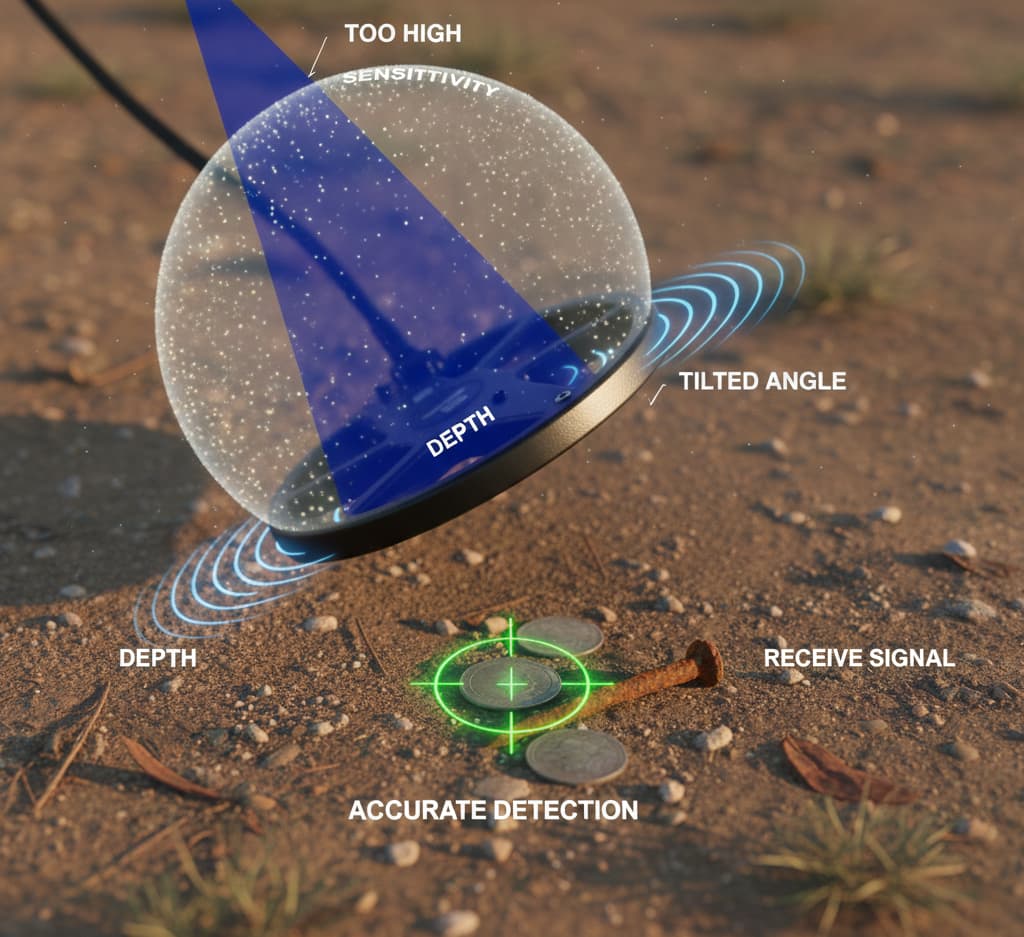
Coil height matters more than many people realize. The electromagnetic field from the coil becomes weaker the farther it is from the target. Even a small increase in height can reduce sensitivity to small objects and can significantly reduce depth on deeper targets.
This mistake often happens without people noticing. For example, someone may start with the coil close to the ground, but after a few minutes they begin lifting it slightly due to fatigue, uneven terrain, or simply not paying attention. Over time, this turns a detector that should feel strong into one that feels weak and inconsistent.
For best performance, keep the coil as close to the ground as possible without scraping or banging it. In many situations, maintaining a steady low height will instantly improve signal strength and reduce missed targets.
Lifting the Coil at the End of Each Swing
This is sometimes called the “golf swing” mistake. Many people naturally lift the coil at the end of each sweep, creating an arc. The result is that the coil spends less time close to the ground, and the detection field becomes inconsistent across the sweep.
When the coil rises at the ends, signals can sound stronger in the middle and weaker at the edges. This leads to confusing target responses and can make it harder to pinpoint accurately. In trashy areas, it can also cause more false responses because the detector is constantly adjusting to changing ground distance.
The fix is simple: try to keep the coil level and parallel to the ground throughout the entire sweep. Think of it like “painting the ground” evenly, not swinging in an arc.
Not Overlapping Sweeps
A metal detector coil covers a certain area, but it does not “see” every inch of ground if you don’t overlap your swings. Many people sweep with gaps between passes, especially when they are excited or trying to cover ground quickly.
This mistake creates missed targets—even when the detector would have detected them if the coil had passed over that spot. It is especially common in open fields and beaches, where it’s easy to drift and leave uncovered lines.
A good rule is to overlap each sweep by about 30–50%. This creates consistent coverage and reduces the chance that a small coin, ring, or thin piece of metal is missed simply because the coil never truly passed over it.
Scrubbing, Bouncing, or Hitting the Ground
Some people let the coil scrape across the surface, hit rocks, or bounce over uneven ground. Others lift it too much to avoid contact. Both extremes can create problems.
Scrubbing or hitting the ground can cause false signals because sudden impacts may create noise or sudden signal spikes. It can also make the detector feel unpredictable, especially on mineralized ground. On the other hand, lifting the coil too much to “protect it” reduces depth and weakens signals.
The goal is controlled movement: keep the coil close and steady, and avoid unnecessary impacts. If you are hunting rough terrain, slow down and focus on keeping the coil stable rather than rushing through the area.
Chasing Unstable Signals Instead of Checking Repeatability
A common mistake is reacting to every small blip or random tone. The coil hears a lot—tiny pieces of trash, ground changes, and noise. If you chase every unstable signal, you will waste time and become frustrated.
Instead, focus on repeatability. When you get a signal, sweep the coil over it again from different directions. A valuable target often becomes more consistent when you approach it from multiple angles, while random noise usually disappears or changes completely.
This simple habit helps you spend your time on the most promising targets, and it makes your hunts feel more productive.
Ignoring Coil Control When Pinpointing
Many people sweep correctly, but then ruin the process during pinpointing. They move the coil too high, make rapid movements, or shift angles. This can cause the target location to feel uncertain and leads to digging the wrong spot.
Good pinpointing starts with good coil control. Keep the coil low and controlled, shorten your sweep, and isolate the strongest part of the signal. When your movement becomes smaller and more focused, the target location becomes clearer.
Assuming Settings Can Replace Good Coil Technique
This is one of the biggest mindset mistakes. People often try to fix poor results by constantly changing sensitivity, discrimination, or other settings. While settings matter, they do not replace coil control.
A detector cannot interpret a clean signal if the coil is moving inconsistently, too high, too fast, or unevenly. In many cases, improving coil technique will produce better results than changing any setting.
Once your coil control is stable, then settings adjustments become much more effective—because you are giving the detector better information to work with.
Final Thoughts on the Metal Detector Search Coil
The search coil plays a central role in how a metal detector performs, directly influencing both detection depth and signal behavior in real hunting conditions. Understanding how the coil interacts with the ground helps explain why some targets sound clear and repeatable, while others appear weak or inconsistent from one sweep to the next.
Many problems detectorists experience are not caused by the machine itself, but by coil control and common beginner mistakes that affect how signals are transmitted and received. When the search coil is used correctly and consistently, target responses become clearer, the detecting process feels more stable, and frustration is greatly reduced.
By improving coil technique and avoiding these common issues, detectorists can often achieve better results without changing equipment. In many cases, learning how to use the search coil effectively has a greater impact on performance than upgrading to a more expensive metal detector.