
Before choosing a beginner metal detector, one of the most important questions you should ask yourself is where you plan to use it most often. Many beginners focus only on price or brand, but location plays a much bigger role than most people realize.
Different environments—such as parks, beaches, forests, or old farmland—have completely different ground conditions. Some areas contain a lot of modern trash, others have mineralized soil, and some locations challenge detectors with wet sand or uneven terrain. A metal detector that performs perfectly in one environment may struggle in another.
Understanding your primary detecting location will help you avoid false signals, frustration, and wasted time. It will also make learning much easier, especially during your first weeks of metal detecting. If you haven’t yet read our complete beginner guide, we strongly recommend starting here:
How to Choose the Right Beginner Metal Detector
Now, let’s break down the most common detecting environments and explain what beginners should expect from each one.
Where Will You Use Your Metal Detector as a Beginner?
Parks and Public Fields
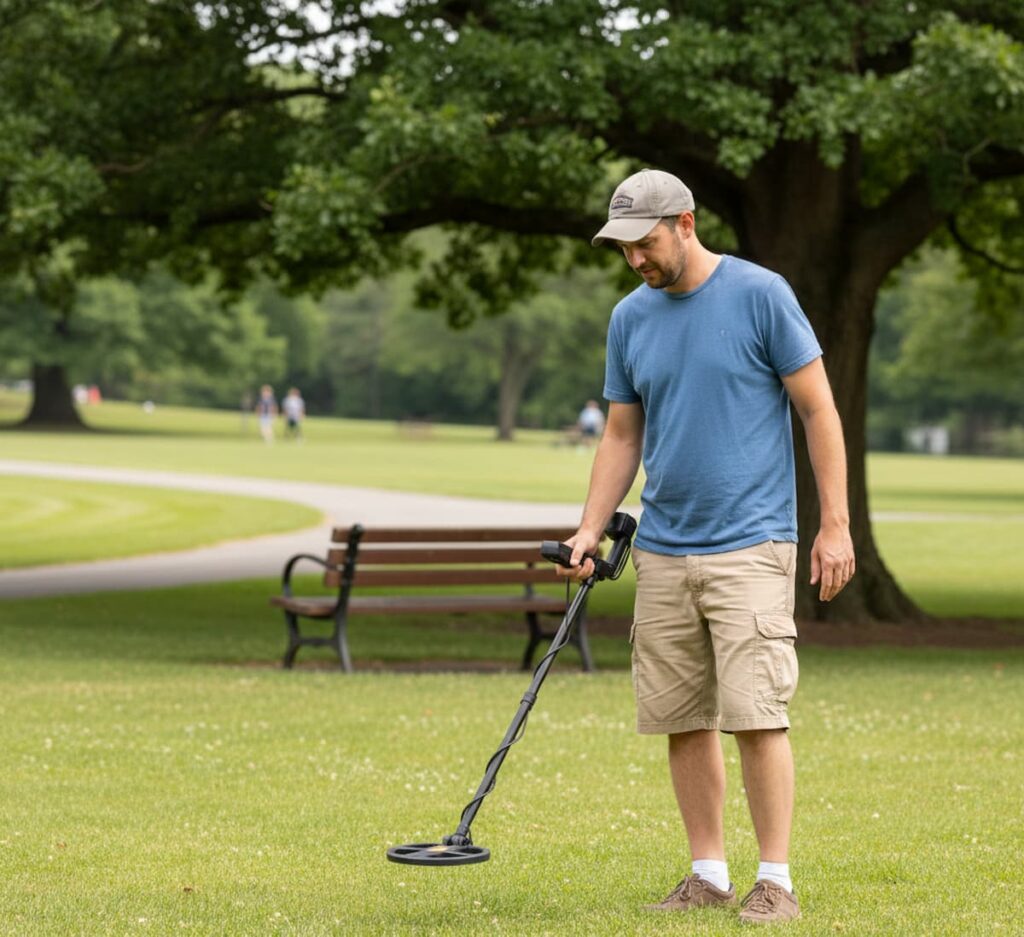
Parks and public fields are one of the most popular detecting locations for beginners, and for good reason. They are usually easy to access, relatively flat, and full of everyday activity, which means people frequently lose coins, jewelry, keys, and other small metal objects. For someone just starting out, these environments provide an excellent balance between learning opportunities and realistic chances of finding something valuable.
One of the first things beginners notice when detecting in parks is the high amount of modern trash. Bottle caps, pull tabs, aluminum foil, and small metal scraps are extremely common. While this may feel frustrating at first, it is actually one of the biggest advantages of park detecting. Learning to identify and filter out unwanted signals helps beginners understand how their metal detector works and improves their ability to recognize different tones and target responses.
Because of this, a beginner metal detector with effective discrimination settings is especially important in parks. Discrimination allows the detector to ignore certain types of metals, reducing the number of false or unwanted signals. Many entry-level detectors offer basic discrimination features that are more than enough for park environments. As a beginner, mastering these settings early will save time and make detecting far more enjoyable.
Another key feature for park detecting is target identification (ID). Parks often contain many shallow targets clustered close together. A clear target ID display or distinct audio tones help beginners decide whether a signal is worth digging. While no detector is perfect, consistent target ID builds confidence and helps users make better decisions with each hunt.
Public fields, such as sports grounds, playground areas, and open grassy spaces, are also excellent locations for beginners. These areas often produce modern coins and small jewelry lost during daily activities. Targets in public fields are usually shallow, which means easier recovery and faster results. This is especially encouraging for beginners who are still learning how to pinpoint targets accurately.
Soil conditions in parks and public fields are generally stable and beginner-friendly. In most cases, mineralization levels are moderate, allowing basic detectors to perform smoothly without constant adjustments. This makes it easier for beginners to focus on technique rather than technical settings. Consistent ground conditions also help new users learn how depth, signal strength, and target size relate to one another.
However, parks also require a higher level of responsibility and awareness. Always check local rules and regulations before detecting, as some parks restrict or prohibit metal detecting. Where detecting is allowed, proper recovery techniques are essential. Cutting clean plugs, replacing soil carefully, and leaving the ground exactly as it was found helps protect the hobby and ensures continued access to public spaces.
Another challenge in parks is signal congestion. Years of activity mean multiple metal objects may be close together, causing overlapping signals. Beginners sometimes interpret this as one large target when it is actually several small ones. Slowing down your swing speed, overlapping each pass, and taking time to analyze signals helps reduce confusion and improves accuracy.
Comfort is another important factor when detecting in parks. Sessions often last several hours, and repetitive swinging can cause fatigue. A lightweight metal detector with good balance allows beginners to hunt longer without discomfort. Reduced fatigue leads to better swing consistency, which directly improves detection results.
Parks are also ideal places to practice essential detecting skills such as pinpointing, plug cutting, and target recovery. Because targets are often shallow, mistakes are less costly, and learning happens faster. Over time, beginners gain confidence and develop habits that will serve them well in more challenging environments like beaches or mineralized soil.
In summary, parks and public fields are one of the best environments for beginners because they offer:
- easy access and flat terrain
- frequent, shallow targets
- excellent opportunities to learn discrimination and tones
- forgiving soil conditions
- real-world practice with recovery techniques
Although trash is common, it plays an important role in the learning process. Many experienced detectorists started their journey in parks, building skills and confidence before moving on to more demanding locations. For beginners, mastering park detecting is often the foundation for long-term success in the hobby.
Beaches
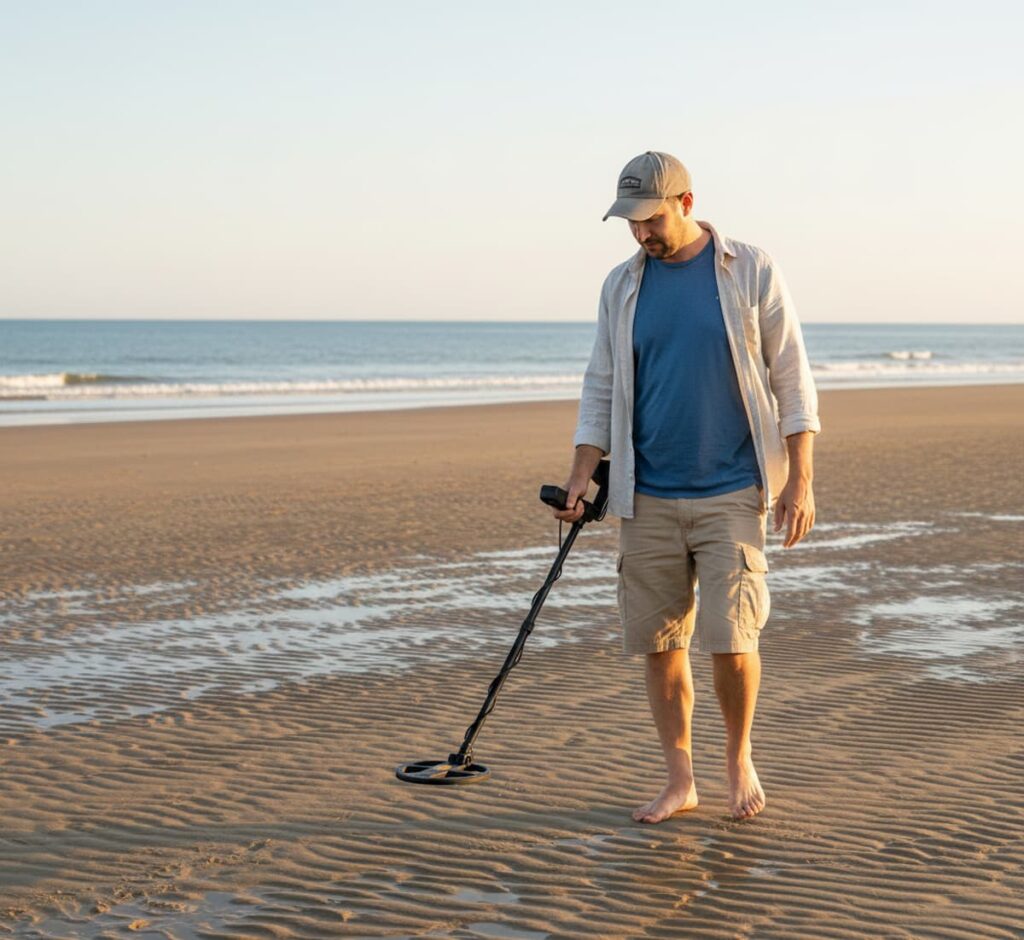
Beaches are among the most attractive and potentially rewarding environments for metal detecting, especially for beginners drawn by the idea of discovering lost jewelry, coins, and personal items hidden beneath the sand. At the same time, beaches are also one of the most technically demanding locations for metal detectors. Without understanding how beach conditions affect detector performance, beginners often struggle with false signals, reduced depth, and inconsistent results.
One of the most important concepts for beach detecting is the difference between dry sand, damp sand, and wet saltwater sand. Dry sand, found above the high-tide line, behaves similarly to normal soil. Most beginner metal detectors operate relatively smoothly in this area, making it an excellent starting point for those new to beach detecting. Targets in dry sand are usually modern losses such as coins, rings, earrings, and small metal accessories dropped by beachgoers during recreational activities.
As you move closer to the waterline, conditions change dramatically. Damp and wet sand contains salt, moisture, and dissolved minerals that create a highly conductive environment. This conductivity can confuse basic detectors, causing unstable signals and frequent false alerts. Many beginners assume their detector is malfunctioning when, in reality, it is reacting to the mineralized salt content in the sand.
Saltwater beaches present a unique challenge because salt behaves similarly to metal from a detector’s perspective. This results in signals that mask real targets or reduce detection depth. To handle this, detectors need effective ground balance systems. Beginner detectors with automatic ground balance or dedicated beach modes are far better suited for these conditions, as they can compensate for changing mineral levels without constant manual adjustment.
Another significant factor in beach detecting is black sand, which is rich in iron minerals. Black sand can severely affect detector performance by creating false signals and reducing target depth. Some beaches contain layers of black sand that appear after storms or strong tides, making previously easy areas suddenly difficult to detect. Beginners using entry-level detectors may experience signal instability in these zones, requiring sensitivity adjustments and slower sweep speeds.
Despite these challenges, beaches offer several advantages that make them extremely appealing. One of the most important benefits is the natural movement of targets. Waves, tides, and storms constantly reshape the beach, uncovering items that may have been buried for years. This means that even beaches searched frequently can produce new finds after weather changes. For beginners, this dynamic environment increases the chances of success over time.
Beach environments also tend to have less iron trash than urban parks. While aluminum and bottle caps can still be found, especially in dry sand areas, the overall signal environment near the waterline is often cleaner. This allows beginners to focus more on learning signal consistency and target depth rather than filtering constant junk signals.
Timing plays a crucial role in successful beach detecting. Low tide exposes areas that are normally underwater, significantly expanding the search zone. Early mornings are often ideal, as beaches are less crowded and recent losses are more likely to be found. Detecting after storms can also be productive, as strong waves may remove layers of sand and expose deeper targets.
Physical conditions at the beach should not be underestimated. Walking and swinging a detector on soft sand is far more tiring than detecting on firm ground. Beginners benefit greatly from using a lightweight detector with good balance and ergonomic design. Fatigue affects swing consistency, which directly impacts detection accuracy and depth.
Water resistance is another important consideration. Beach detecting often involves exposure to splashing waves, wet sand, and moisture. Detectors with waterproof or water-resistant coils are highly recommended for beginners. Even brief contact with saltwater can damage non-protected components over time, leading to corrosion and performance issues.
Maintenance is especially important after beach detecting sessions. Saltwater is highly corrosive and can damage metal detector parts if not properly cleaned. Rinsing the coil, lower shaft, and accessories with fresh water after each beach hunt helps prevent long-term damage and ensures consistent performance.
From a learning perspective, beaches teach beginners valuable lessons about sensitivity control and patience. Unlike parks, where targets are often shallow and frequent, beach detecting may require longer searches with fewer signals. Learning to trust stable, repeatable signals and ignore inconsistent ones is a critical skill that beginners develop over time.
It is also important for beginners to understand that not all beaches are the same. Freshwater beaches, such as those near lakes, are generally easier to detect than saltwater beaches. Freshwater lacks the high salt content that causes instability, making it more forgiving for entry-level detectors. Beginners often find freshwater beaches to be an excellent transition between park detecting and saltwater environments.
In summary, beaches offer incredible opportunities but demand more preparation and understanding than many other environments. Beginners who approach beach detecting with realistic expectations, proper equipment, and a willingness to learn will find it to be one of the most rewarding detecting locations. By starting in dry sand, gradually moving toward wet areas, and learning how your detector reacts to mineralized conditions, you build skills that will greatly improve your success across all detecting environments.
Forests and Rural Areas
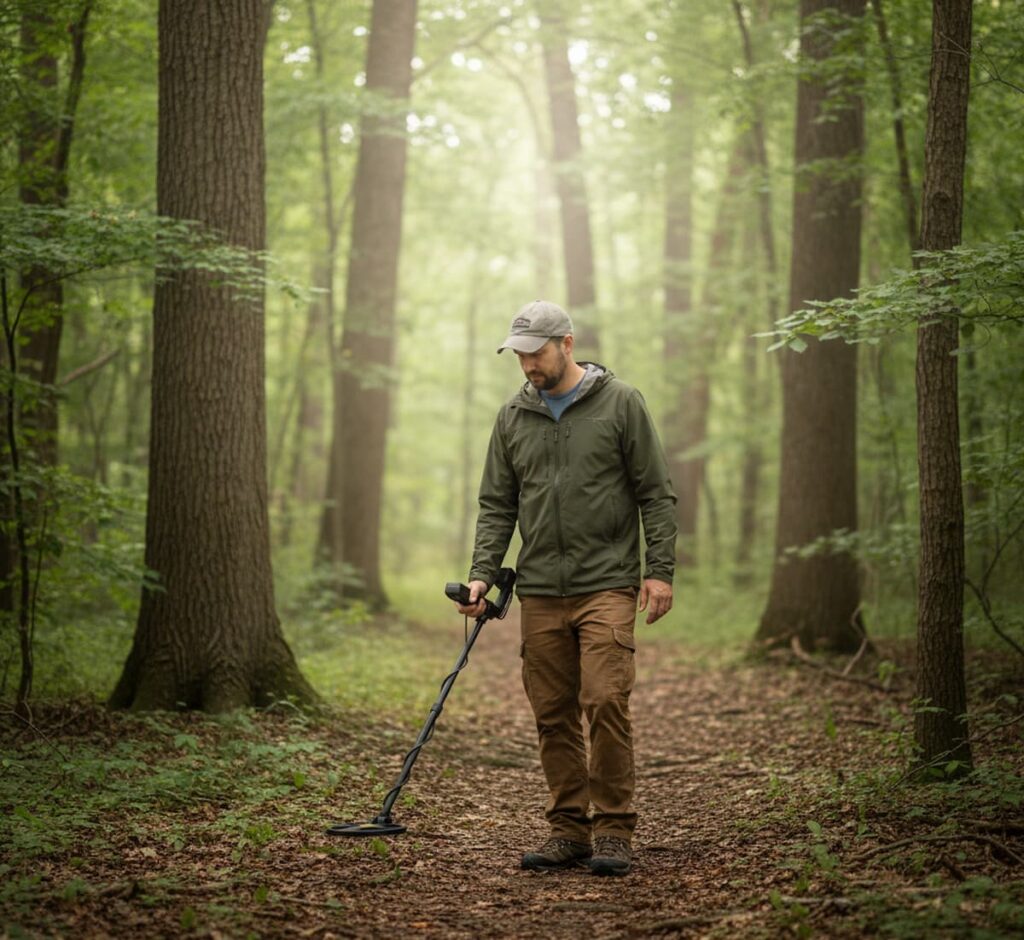
Forests and rural areas offer a very different metal detecting experience compared to parks or beaches. These environments are often associated with older finds, historical artifacts, and locations that have seen less modern disturbance. For many beginners, detecting in forests and rural land feels more adventurous and rewarding, but it also comes with unique challenges that require a different approach and mindset.
One of the biggest advantages of forests and rural areas is the lower amount of modern trash. Unlike parks, which are filled with aluminum and bottle caps, rural land often contains fewer recent metal objects. This cleaner signal environment allows beginners to focus on deeper targets and learn how their detector responds to older metals such as copper, brass, and iron relics. While this may reduce the number of finds in a single session, it often increases the historical value of what is discovered.
Ground conditions in forests and rural areas can vary significantly. Soil may be highly mineralized, especially in areas with a history of mining, volcanic activity, or iron-rich terrain. Rocks, roots, uneven ground, and organic debris all affect how a metal detector performs. Beginner detectors without advanced ground balance features may struggle in these conditions, producing unstable signals or reduced depth.
Because of this, ground balance becomes a critical factor in rural detecting. Detectors with automatic ground balance help beginners adapt to changing soil conditions without constant adjustments. Manual ground balance, while more precise, requires practice and patience. Beginners who take the time to understand ground balance gain better depth and more accurate target identification in challenging terrain.
Forests often contain thick vegetation and obstacles, which affect swing technique and coil control. Maintaining a consistent swing height becomes more difficult when navigating roots, fallen branches, and uneven surfaces. Slowing down and using smaller coils can greatly improve accuracy in these environments. Beginners quickly learn that rushing through forested areas leads to missed targets and inconsistent signals.
Rural areas such as old farmland, pastures, and abandoned settlements are particularly appealing for beginners interested in history. These locations often produce older coins, farming tools, buttons, and relics from previous centuries. Understanding land history plays a major role in success. Old maps, historical records, and local knowledge can guide beginners toward productive search areas rather than random detecting.
One important aspect of rural detecting is target depth. Many rural finds are buried deeper than modern park targets due to decades of soil buildup. Beginners should expect fewer shallow signals and learn to dig deeper, more deliberate holes. A detector with good depth capability and stable performance is essential in these conditions.
Forests and rural environments also demand greater attention to signal interpretation. Iron objects such as nails, horseshoes, and farming equipment are common, and iron signals can mask valuable targets. Beginners must learn to recognize subtle tone changes and repeatable signals that indicate non-ferrous metals hidden among iron debris. This skill takes time but greatly improves success rates.
Physical endurance is another important consideration. Detecting in forests and rural areas often involves long walks, uneven ground, and limited access points. Beginners benefit from using a lightweight detector and wearing comfortable footwear. Carrying essential tools such as a pinpointer, digging tool, and protective gloves improves safety and efficiency.
Weather conditions also play a role in rural detecting. Forests retain moisture longer than open fields, affecting soil conductivity and signal strength. Wet soil often improves detection depth, but it can also increase mineralization effects. Beginners should be prepared to adjust sensitivity and sweep speed based on ground conditions.
Another critical factor in rural detecting is permission and legality. Unlike public parks, rural land is often privately owned. Beginners must always obtain landowner permission before detecting. Respecting property boundaries and following ethical detecting practices protects the reputation of the hobby and ensures continued access to productive locations.
From a learning perspective, forests and rural areas teach beginners patience, research skills, and adaptability. Sessions may produce fewer finds than park detecting, but the quality and historical significance of those finds often make the effort worthwhile. Beginners who learn to read the land, understand soil conditions, and interpret subtle signals develop skills that translate well to all other detecting environments.
In summary, forests and rural areas are ideal for beginners who want to move beyond modern finds and explore the historical side of metal detecting. While these environments require more preparation, careful technique, and patience, they offer some of the most meaningful and rewarding detecting experiences. By taking time to understand ground conditions, practicing slow and controlled swings, and researching locations in advance, beginners can greatly increase their chances of success in rural detecting.
So, Where Should You Start Metal Detecting?
Choosing the right metal detecting location is just as important as choosing the right metal detector itself. As a beginner, understanding where you plan to search helps you avoid unnecessary frustration and allows you to learn faster while getting better results from the very beginning.
So, where should you use your metal detector first?
The answer depends on your goals, your surroundings, and how much complexity you are ready to handle. Parks and public fields are ideal for beginners who want easy access, shallow targets, and a forgiving learning environment. Beaches offer exciting opportunities, especially for jewelry finds, but require a better understanding of mineralized sand and detector settings. Forests and rural areas appeal to those interested in older and more meaningful finds, but they demand patience, research, and the ability to work with challenging ground conditions.
Can beginners use the same metal detector in all of these environments?
In many cases, yes—but with realistic expectations. While some beginner detectors can perform reasonably well across multiple locations, no single detector works perfectly everywhere without compromise. Understanding the strengths and limitations of your detector in each environment allows you to adjust your approach and get the best possible results.
The key for beginners is not to search everywhere at once, but to start in one environment and learn it well. By focusing on a single type of location, you develop essential skills such as signal interpretation, proper recovery techniques, and consistent swing control. These skills transfer naturally to other environments as you gain experience.
In the end, successful metal detecting is not just about the equipment you use, but about understanding the ground beneath your feet. When you match your detector, your expectations, and your detecting location, the learning process becomes smoother—and the chances of making exciting finds increase significantly.