
Starting metal detecting is exciting, but beginners often make small mistakes that can slow down progress and lead to frustration. Many of these errors are easy to avoid once you know what to look out for.
In this guide, you’ll learn the most common metal detecting mistakes for beginners — and how to avoid them…
Choosing the Wrong Location to Detect
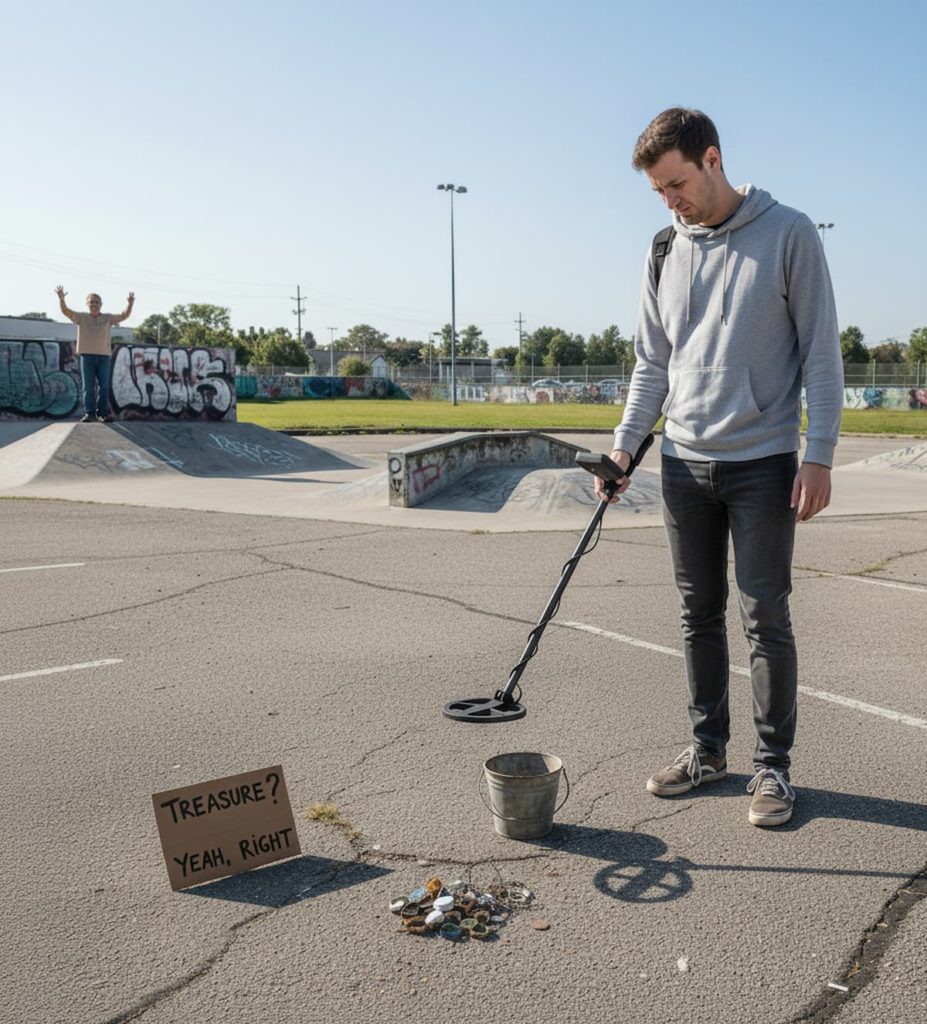
One of the biggest mistakes beginners make in metal detecting is choosing the wrong location to search. Many newcomers believe that simply turning on a metal detector anywhere will lead to valuable finds, but in reality, location plays a crucial role in success. Even the best metal detector will produce poor results if it is used in the wrong environment or without understanding the history and conditions of the area.
Different locations hold different types of targets. Parks, beaches, forests, and old farmland each have their own characteristics, challenges, and potential rewards. Beginners often expect coins, jewelry, or relics to appear quickly, regardless of where they search. When this doesn’t happen, frustration sets in, and many give up too early. Understanding how location affects what you find can completely change your metal detecting experience.
Public parks are a common starting point for beginners, but they are often misunderstood. While parks can produce coins and jewelry, they are usually heavily searched by other detectorists. This means valuable targets may be deeper or masked by trash. Beginners who are unaware of this may assume their detector isn’t working properly when, in fact, the area has simply been searched many times before. Learning how to recognize older sections of parks or less obvious areas can make a huge difference.
Beaches are another popular location that beginners often choose without preparation. Dry sand, wet sand, and shallow water all behave differently when it comes to metal detection. Signals can be affected by mineralization, saltwater, and moisture levels. A beginner using incorrect settings or expecting the same results as in a park may quickly become discouraged. However, with the right understanding of beach environments, beaches can be one of the most rewarding places to detect.
Forests and open fields attract beginners because they seem untouched and full of potential. While these areas can be excellent for relic hunting, they also require patience and research. Many forests have limited human activity in the past, meaning fewer targets overall. Beginners who randomly search large areas without knowing the history of the land often waste time and energy. Researching old paths, settlements, or gathering areas can greatly improve success in these environments.
Another common mistake is ignoring land ownership and local regulations. Beginners sometimes detect on private property without permission or in restricted areas, which can lead to legal trouble and a negative image for the hobby. Even public land may have specific rules regarding metal detecting. Understanding where detecting is allowed is just as important as choosing a location with good potential.
Beginners also tend to overlook the importance of historical research. Successful metal detecting isn’t just about swinging a coil—it’s about understanding the past. Old maps, local history records, and community knowledge can reveal locations where people gathered, worked, or traveled decades or even centuries ago. Without this context, beginners often search modern areas with little historical value and wonder why they only find trash.
Terrain conditions also play a role in location choice. Rocky ground, heavy vegetation, or highly mineralized soil can make detecting more difficult for beginners. These conditions can affect signal quality and make target recovery harder. Choosing beginner-friendly locations with manageable ground conditions allows new detectorists to focus on learning signals and recovery techniques rather than fighting the environment.
Weather and seasonal factors are often ignored as well. Some locations produce better results at certain times of the year. For example, beaches can reveal new targets after storms, and parks may be easier to search during off-season months when vegetation is low. Beginners who detect only during busy or unfavorable times may miss valuable opportunities.
Understanding where to detect is just as important as understanding how to use your metal detector. Choosing the right location helps beginners build confidence, recognize good signals, and enjoy early success. If you want a deeper breakdown of how different environments affect metal detecting results, take time to explore this guide.
“Where Will You Use Your Metal Detector?”
By learning to select the right locations, beginners set a strong foundation for long-term success. Instead of randomly searching and hoping for the best, a thoughtful approach to location choice can lead to more finds, less frustration, and a much more enjoyable metal detecting journey.
Moving the Search Coil Too Fast

One of the most common mistakes beginners make in metal detecting is moving the search coil too fast. While it may feel natural to sweep quickly in order to cover more ground, this habit often leads to missed targets and unreliable signals. Metal detectors need time to process what lies beneath the coil, and when the coil moves too quickly, valuable targets can be completely overlooked.
A metal detector works by sending and receiving electromagnetic signals through the search coil. When the coil passes over a metal object, the detector analyzes the signal before producing a sound or visual response. If the coil is swept too fast, the detector may not have enough time to properly identify the target. As a result, deeper or smaller objects often go undetected, especially coins, thin jewelry, or relics buried beneath layers of soil.
Beginners often rush their sweep because they believe speed equals efficiency. In reality, slower and more controlled movements are far more effective. A slow sweep allows the detector to clearly separate good signals from background noise and trash. This is particularly important in areas with a lot of metal debris, where fast movements can cause signals to blend together or disappear entirely.
Another issue caused by swinging too fast is poor ground coverage. Many beginners move the coil in wide, uneven arcs, leaving gaps between sweeps. These gaps can easily hide targets that are never scanned. A proper technique involves slow, overlapping sweeps that ensure every inch of ground is checked. Overlapping the coil by at least 30–50 percent on each pass greatly increases the chances of detecting hidden objects.
Coil height also plays an important role. Beginners sometimes lift the coil at the end of each swing, creating an uneven scanning pattern. When the coil is raised, detection depth is reduced, and targets near the edges of the swing may be missed. Keeping the coil low and level with the ground throughout the entire sweep helps maintain consistent detection depth and signal strength.
Terrain conditions can make this mistake even more problematic. Uneven ground, tall grass, rocks, or mineralized soil all require slower coil movement for accurate detection. In these conditions, rushing the sweep increases false signals and makes it harder to identify real targets. Slowing down allows the detector to adapt to changes in the ground and produce more stable readings.
Fatigue also contributes to this common error. As beginners spend more time detecting, they may unconsciously speed up their movements to finish an area more quickly. This usually results in poorer performance and fewer finds. Taking regular breaks and focusing on controlled, deliberate movements helps maintain proper technique throughout a detecting session.
Learning to slow down improves not only detection accuracy but also confidence. When beginners take their time, they begin to recognize subtle signal changes and understand how their detector responds to different targets. This skill is essential for long-term success in metal detecting. Rushing the process delays learning and leads to frustration.
Proper coil control goes hand in hand with understanding your detector’s settings. Sensitivity, discrimination, and ground balance all affect how quickly a detector can respond to signals. Beginners who are unfamiliar with these settings often compensate by moving faster, which only worsens the problem. Taking time to learn how your detector behaves allows you to match your sweep speed to its capabilities.
“How to Choose the Right Beginner Metal Detector”
In metal detecting, patience is just as important as equipment. Slowing down your sweep, maintaining proper coil height, and overlapping each pass will significantly improve your results. By avoiding the mistake of moving the search coil too fast, beginners can detect more targets, reduce missed opportunities, and enjoy a more rewarding metal detecting experience.
Not Learning Detector Settings
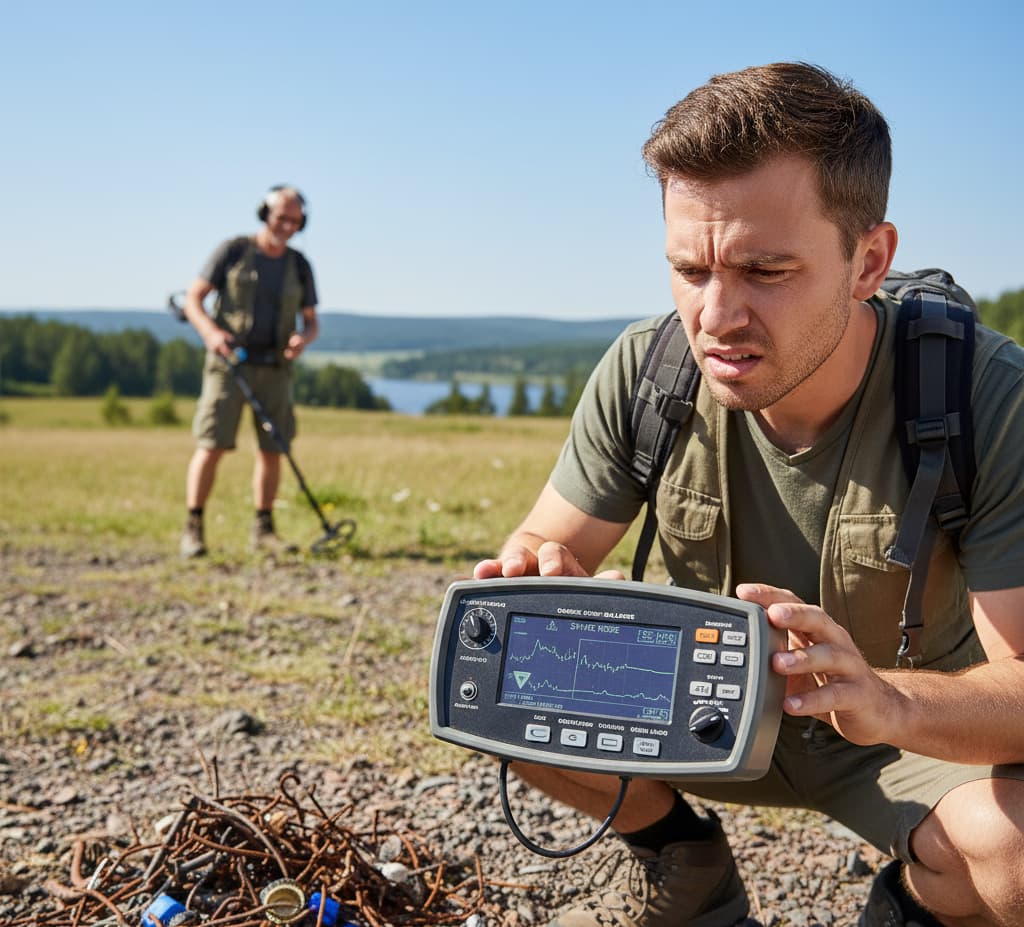
One of the most overlooked mistakes beginners make in metal detecting is not taking the time to learn their detector’s settings. Many new users turn on their detector, leave it on factory presets, and start searching immediately. While preset modes can work in some situations, relying on them without understanding how the detector behaves often leads to unstable signals, missed targets, and unnecessary frustration.
Every metal detector is designed to operate in different environments, and its settings exist to help adapt to changing ground conditions. When beginners ignore these settings, they often blame the detector itself instead of realizing that improper configuration is the real problem. Learning even the basic functions of your detector can significantly improve performance and results.
One of the most important settings is sensitivity. Sensitivity controls how strongly the detector reacts to metal signals. Beginners often assume that higher sensitivity is always better, but this is not true. When sensitivity is set too high, the detector becomes unstable and produces constant false signals, especially in mineralized soil or trash-filled areas. Lowering sensitivity slightly often results in clearer, more reliable signals and better target identification.
Another critical setting is discrimination. Discrimination allows the detector to ignore certain types of metal, such as iron or small trash items. Beginners frequently set discrimination too high in an attempt to avoid digging trash. Unfortunately, this can also cause valuable targets—such as small coins, thin jewelry, or gold—to be completely ignored. Understanding how discrimination affects different metals helps beginners make smarter decisions about what signals to dig and what to skip.
Ground balance is one of the least understood settings for new detectorists, yet it plays a major role in successful metal detecting. Ground balance helps the detector adjust to natural minerals found in soil. Many types of soil contain iron minerals or salts that can interfere with detection. This phenomenon is known as ground mineralization. Highly mineralized ground can cause false signals, unstable operation, and reduced depth if the detector is not properly balanced.
Mineralization varies greatly depending on location. Beaches, red clay soil, volcanic areas, and rocky terrain often contain high mineral content. Beginners who are unaware of this may think their detector is malfunctioning when, in reality, it is reacting to the ground itself. Proper ground balance allows the detector to ignore mineral interference and focus on real metal targets. Even detectors with automatic ground balance benefit from user understanding of how and when to adjust it.
Another common issue is using the same settings in every environment. Parks, beaches, forests, and open fields all require different approaches. Soil moisture, trash levels, and mineral content change from place to place. Beginners who fail to adapt their settings often experience inconsistent results. Learning how to slightly adjust sensitivity, discrimination, and ground balance for each location leads to better performance and fewer missed targets.
Audio settings are also important but often ignored. Tone modes, volume levels, and target ID responses help users identify what lies beneath the coil. Beginners who do not learn how these audio cues work miss valuable information. Over time, experienced detectorists rely heavily on sound patterns rather than visual displays alone. Developing this skill starts with understanding the detector’s audio settings.
Not learning detector settings also slows down the learning process. Metal detecting is not just about finding objects—it is about understanding signals, recognizing patterns, and making informed decisions. Beginners who avoid learning their settings often dig more trash and feel discouraged. Those who invest time in learning how their detector responds in different situations build confidence and enjoy faster progress.
Understanding detector settings does not require advanced technical knowledge. Most beginner detectors are designed to be user-friendly, and learning the basics makes a noticeable difference. Taking time to understand how your detector works allows you to adapt to different terrains, reduce false signals, and detect targets more accurately.
In metal detecting, success depends on more than just equipment—it depends on knowledge. By learning detector settings and understanding ground mineralization, beginners avoid one of the most common mistakes and set themselves up for long-term success in the hobby.
Digging Every Signal

One of the most common beginner mistakes in metal detecting is digging every signal without understanding what the detector is trying to tell you. At first, this approach may seem logical—after all, how can you know what’s underground if you don’t dig? However, constantly digging every signal quickly leads to frustration, wasted energy, and a pouch full of trash instead of valuable finds.
In the early stages, beginners often lack confidence in interpreting signals. As a result, they dig everything just to avoid missing something valuable. While this can be helpful for learning at the very beginning, continuing this habit for too long slows progress and makes metal detecting less enjoyable. Learning when to dig and when to pass is a key skill that separates beginners from more experienced detectorists.
Metal detectors provide information through sound, target ID numbers, and signal consistency. Beginners who ignore these clues miss an opportunity to learn how different metals behave. For example, shallow trash often produces sharp, erratic signals, while coins usually give more consistent and repeatable responses. By paying attention to how signals behave when you sweep the coil from different directions, you can start identifying likely targets before digging.
Another issue with digging every signal is time efficiency. Digging takes far more time than sweeping. Spending several minutes digging a piece of foil or a bottle cap reduces the time available to scan new ground. Over the course of a detecting session, this can significantly limit the number of potential targets you encounter. Learning to recognize low-quality signals helps you cover more ground and increases your chances of finding something worthwhile.
Trash-heavy areas such as parks and public spaces make this mistake even more noticeable. Beginners often encounter pull tabs, nails, aluminum scraps, and other junk. Digging every one of these items can quickly become exhausting. This is where understanding discrimination and target ID becomes important. While no setting is perfect, using basic discrimination wisely can reduce the number of unnecessary digs without completely eliminating valuable targets.
It’s also important to understand that some valuable finds share similar signal characteristics with trash. Gold jewelry, for example, often falls into the same signal range as pull tabs. This is why experienced detectorists still dig certain “iffy” signals. The key difference is that they make informed decisions rather than digging blindly. Beginners should aim to strike a balance—dig enough signals to learn, but not every signal without consideration.
Signal depth is another helpful clue. Shallow, loud signals are often modern trash, especially in well-used areas. Deeper, softer signals may indicate older targets worth investigating. Beginners who learn to read depth indicators and audio strength gain an advantage when deciding which signals deserve attention.
Soil conditions and mineralization can also affect signals. In highly mineralized ground, false signals may occur more frequently. Digging every unstable signal in such conditions quickly becomes frustrating. Understanding how your detector behaves in different ground types helps you recognize false signals caused by mineralization rather than actual metal targets.
Another common reason beginners dig every signal is fear of missing out. This fear is natural but can be managed through practice and learning. Missing an occasional target is part of metal detecting, even for experienced users. Over time, improving signal interpretation leads to better results than trying to dig everything just in case.
Learning when to dig is closely connected to understanding your detector’s settings and responses. Sensitivity, discrimination, and audio modes all influence how signals are presented. Beginners who take time to understand these features develop better judgment in the field.
Digging every signal may feel like the safest approach at first, but it is not sustainable. Metal detecting becomes far more rewarding when you learn to listen to your detector, interpret signals, and make informed decisions. By avoiding the habit of digging every signal, beginners save time, reduce frustration, and improve their overall success in the hobby.
Ignoring Local Laws and Ethics
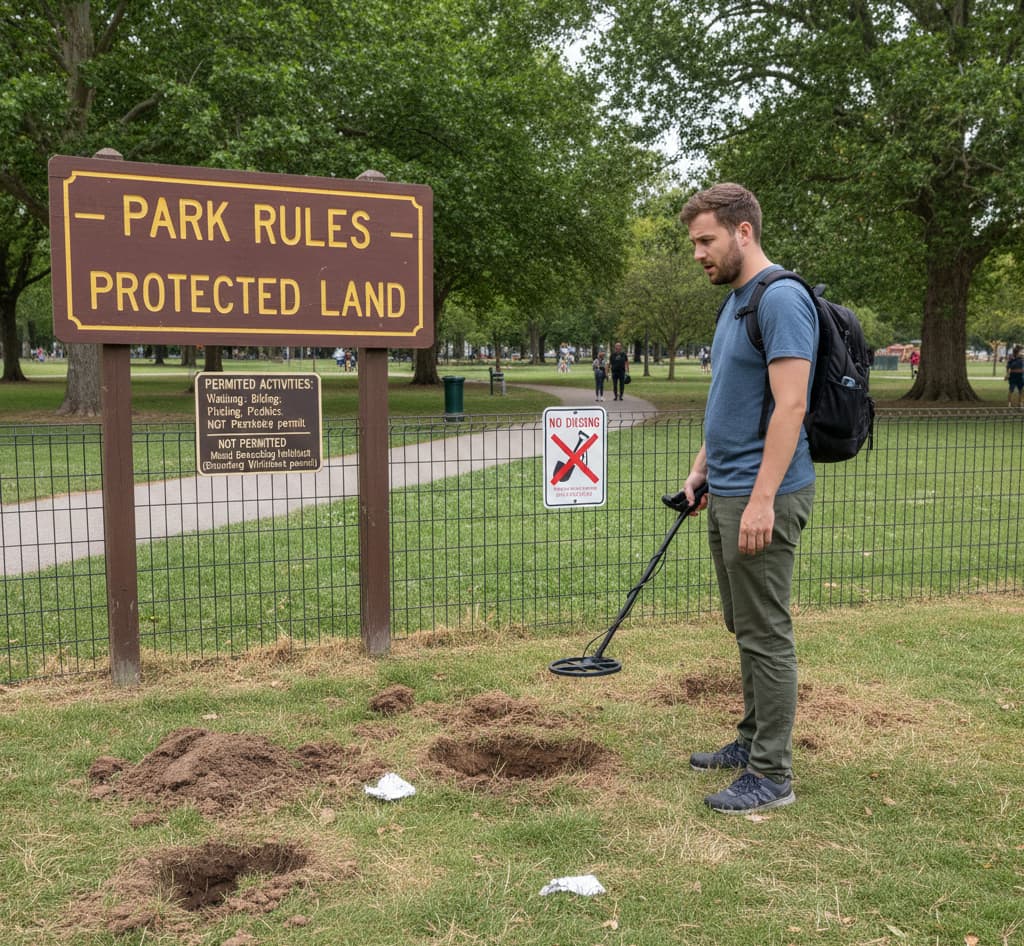
One of the most serious mistakes beginners make in metal detecting is ignoring local laws and ethical guidelines. While metal detecting is an enjoyable and rewarding hobby, it is also an activity that comes with responsibilities. Failing to understand where and how detecting is allowed can lead to legal trouble, damaged sites, and a negative reputation for the hobby as a whole.
Laws regarding metal detecting vary widely depending on country, region, and even local municipality. Some areas allow detecting freely, while others restrict or completely prohibit it. Public parks, historical sites, beaches, and forests may each have different rules. Beginners often assume that if an area is public, detecting is automatically permitted, which is not always the case. Understanding local regulations before detecting is essential for avoiding fines or confiscation of equipment.
Private property presents another common issue. Detecting on private land without permission is illegal in many places and can result in serious consequences. Beginners sometimes assume that open fields or unused land are free to search, but ownership still applies. Always obtaining permission from landowners not only protects you legally but also helps build trust and goodwill within the community.
Historical and protected sites require special attention. Many countries strictly prohibit metal detecting on archaeological or culturally significant locations. These laws exist to protect history and preserve important artifacts for future generations. Beginners who unknowingly detect in these areas may cause irreversible damage. Learning how to recognize protected sites and understanding why they are off-limits is a crucial part of responsible detecting.
Ethics in metal detecting go beyond legal requirements. Even in places where detecting is allowed, how you conduct yourself matters. Proper recovery techniques are essential. Digging large holes, leaving trash behind, or failing to refill holes can damage the environment and lead to complaints from the public. Responsible detectorists always leave an area in the same or better condition than they found it.
Another ethical consideration is what to do with recovered items. In some regions, certain finds must be reported to local authorities or landowners. Beginners often overlook these rules and assume that everything they find belongs to them. Understanding reporting requirements and respecting ownership rights demonstrates integrity and helps protect the future of the hobby.
Public perception plays a significant role in the future of metal detecting. Irresponsible behavior by a few individuals can result in stricter laws for everyone. When beginners follow ethical practices—such as filling holes, removing trash, and respecting property—they help maintain a positive image of the hobby. This benefits both current detectorists and future generations.
Environmental awareness is also part of ethical detecting. Avoiding damage to plants, wildlife, and natural habitats is essential. Some areas may be especially sensitive during certain seasons, such as nesting periods or wet conditions. Beginners who take the time to understand environmental impacts contribute to sustainable and respectful detecting practices.
Education is the key to avoiding legal and ethical mistakes. Before detecting in a new area, beginners should research local regulations, talk to experienced detectorists, or consult official resources. Understanding where detecting is allowed and what responsibilities come with it allows beginners to enjoy the hobby without unnecessary risks.
Ignoring laws and ethics can quickly turn an enjoyable hobby into a problem. By learning and respecting local regulations and ethical guidelines, beginners protect themselves, preserve historical sites, and help ensure that metal detecting remains a welcome activity in their communities. Responsible detecting is not just about finding metal—it’s about respecting the land, history, and people connected to it.
Final Thoughts
Metal detecting is a hobby that rewards patience, learning, and experience. Most beginner mistakes are not caused by bad equipment, but by lack of knowledge and unrealistic expectations. By understanding common errors—such as choosing the wrong location, moving the search coil too fast, ignoring detector settings, digging every signal, and overlooking laws and ethics—beginners can progress faster and enjoy the hobby more from the very beginning.
Learning how your detector works, respecting the environment, and developing good habits early on will save time, reduce frustration, and lead to better finds. Metal detecting is a skill that improves with practice, and every mistake is an opportunity to learn and improve.
By avoiding these metal detecting mistakes for beginners, you can progress faster and enjoy the hobby from day one.
Below are some common questions beginners often ask when starting out.
Is it normal to find mostly trash when starting metal detecting?
Yes, finding trash at the beginning is completely normal. Every metal detectorist goes through this phase. Trash signals help beginners learn how different metals sound and behave. Over time, recognizing good signals becomes easier, and the ratio of valuable finds improves.
Should beginners dig every signal?
At first, digging more signals can help with learning. However, beginners should gradually start paying attention to signal consistency, depth, and target ID. Learning when to dig and when to pass is an important skill that develops with experience.
Do I need to change detector settings for different locations?
Yes. Different environments such as parks, beaches, and forests require different settings. Ground conditions, mineralization, and trash levels affect how a detector performs. Learning basic adjustments like sensitivity, discrimination, and ground balance makes a noticeable difference.
How important is ground mineralization in metal detecting?
Ground mineralization plays a major role in detection accuracy. Highly mineralized soil can cause false signals and reduce depth. Proper ground balance helps the detector ignore mineral interference and focus on real metal targets.
Can beginners use factory preset modes successfully?
Factory presets are a good starting point, but they are not ideal for every situation. Beginners should view presets as a learning tool and gradually explore manual adjustments as they gain experience.
Is metal detecting legal everywhere?
No. Metal detecting laws vary by location. Some areas allow detecting, while others restrict or prohibit it. Beginners should always check local regulations and obtain permission when required before detecting.
How long does it take to get good at metal detecting?
There is no fixed timeline. Some beginners find valuable items quickly, while others take longer. Consistent practice, learning from mistakes, and understanding your detector all contribute to improvement over time.
What is the best advice for beginners in metal detecting?
Take your time, learn your detector, respect the land and local laws, and enjoy the process. Success in metal detecting comes from patience and knowledge, not speed.