
If you’re wondering how deep a metal detector can detect in real-world conditions, the answer depends heavily on what’s happening beneath the surface. To fully understand why detection depth changes so much from place to place, it helps to know how metal detectors work and how ground conditions interfere with detection signals. The location itself also matters, since where you will use your metal detector directly affects mineralization, moisture, and soil behavior.
What Are Ground Conditions for Metal Detector Depth?
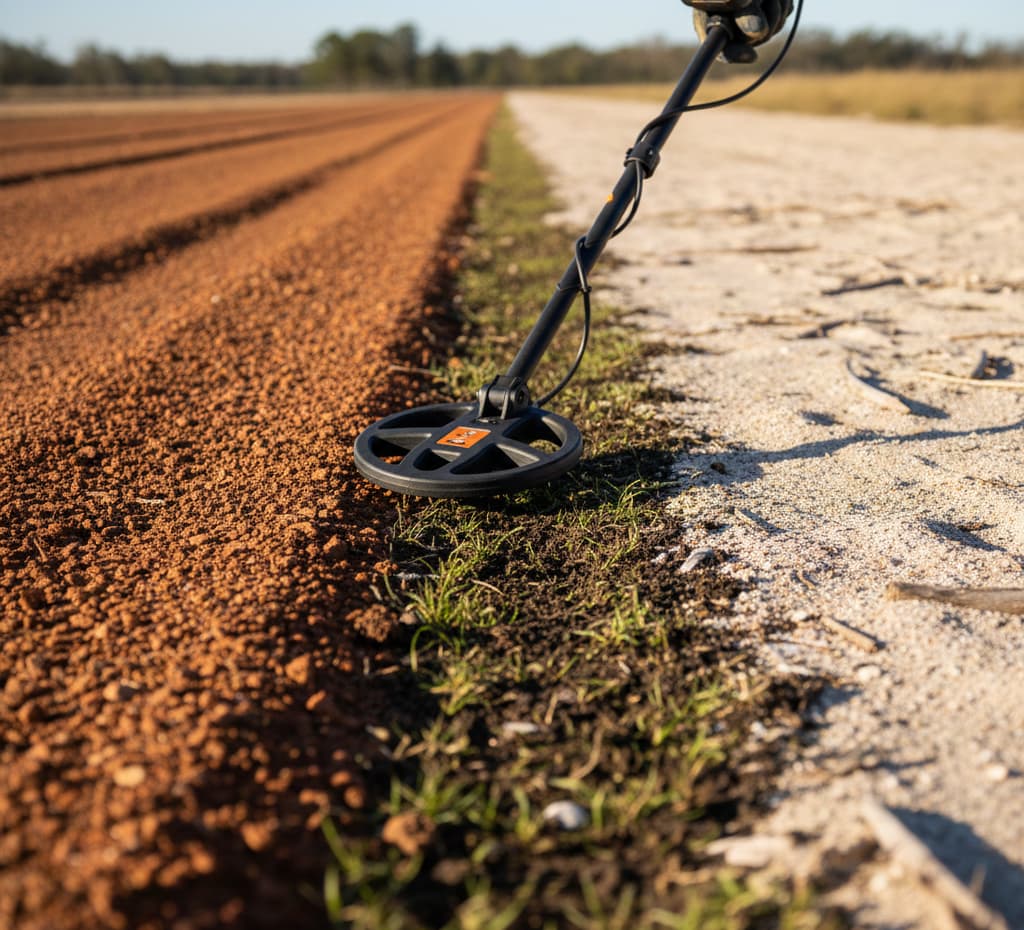
Ground conditions describe the physical and chemical properties of the soil that a metal detector operates in. These conditions determine how well electromagnetic signals travel through the ground and how accurately a detector can identify buried metal targets. Even the best metal detector cannot perform at its full potential if the ground conditions are unfavorable.
In metal detecting, the ground is rarely neutral. Most soil contains natural minerals, varying moisture levels, and different types of material such as clay, sand, rocks, or organic matter. These elements can interact with a detector’s signal, sometimes enhancing detection depth but often reducing it. This is why two identical detectors can produce very different results depending on where they are used.
One of the most important aspects of ground conditions is mineralization. Mineralized soil contains natural metals such as iron oxides that create background signals. These signals compete with the detector’s ability to recognize real targets, causing a loss of depth and accuracy. Highly mineralized ground is one of the most common reasons beginners struggle to detect deeper objects.
Moisture is another major factor. Wet soil can improve conductivity, allowing signals to travel more efficiently and sometimes increasing detection depth. However, moisture can also amplify mineralization effects or introduce additional noise, depending on the soil composition. Dry ground, on the other hand, may offer more stable signals but often reduces overall detection depth.
Ground conditions also include environmental challenges such as salt content, rocky terrain, and surface trash. Saltwater beaches, for example, create unique interference that can overwhelm many detectors if not properly designed or adjusted. Rocky or compacted ground can physically limit how deep targets are buried, while trash-filled areas can cause good signals to be masked by iron or junk.
Understanding ground conditions helps explain why metal detector depth is not a fixed value. Detection depth changes with the environment, not just the detector itself. By learning how different ground conditions affect performance, beginners can set realistic expectations, choose appropriate locations, and improve their overall success in the field.
Mineralized Soil and Detection Depth
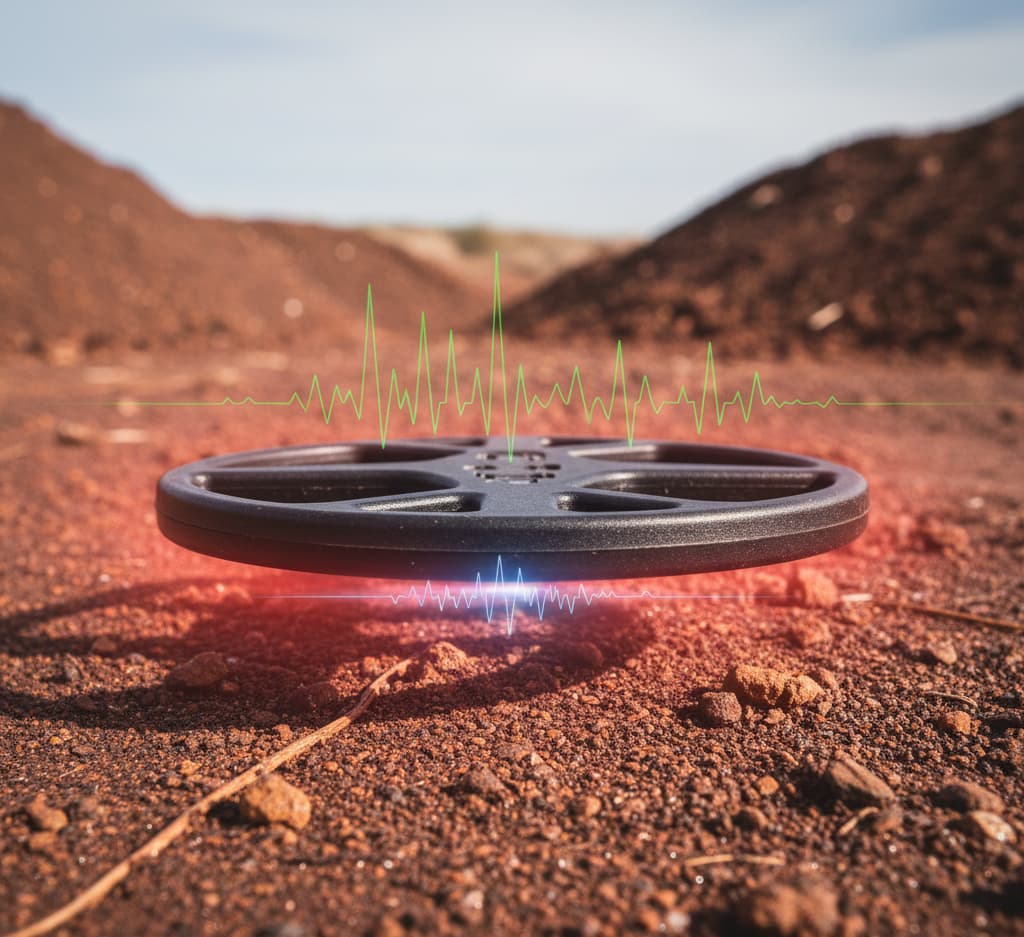
Mineralized soil is one of the biggest reasons metal detectors lose depth. Many beginners buy a detector expecting consistent performance everywhere, but soil conditions can change everything. When the ground contains a high level of natural minerals, those minerals interfere with the detector’s signal and reduce its ability to see deep targets.
In simple terms, mineralized soil produces its own signal. Metal detectors are designed to detect changes in electromagnetic fields caused by metal objects, but mineralized ground also creates a response. The detector must separate the ground signal from the target signal, and when mineralization is strong, this becomes much harder. The result is reduced depth, unstable signals, and missed targets.
One of the most common problems caused by mineralization is signal masking. Strong ground responses can overpower weaker signals coming from deep or small targets. Coins, thin jewelry, and low-conductive metals are especially affected. This often leads beginners to believe their detector is faulty, when in reality the ground is limiting what can be detected.
Mineralized soil also affects target identification. In difficult ground, detectors may produce jumpy or inaccurate target ID numbers. Non-ferrous targets can sound like iron, and good signals may disappear after just a few sweeps. Understanding how a metal detector processes signals makes it easier to recognize why this happens and why depth claims rarely match real-world results.
Different environments contain different levels of mineralization. Forests, plowed fields, red clay soil, and mountainous areas tend to be more mineralized than parks or sandy locations. Even within the same field, mineralization can change from one spot to another. This explains why detection depth can vary dramatically without any change in equipment or settings.
Moisture can make mineralized soil even more challenging. Wet mineralized ground often increases ground noise, making signals less stable and harder to interpret. While moisture can sometimes improve conductivity, in mineral-rich soil it often amplifies interference instead of increasing depth. This is why detecting conditions may feel worse after rain in certain areas.
Choosing the right location is often more important than changing detector settings. Some places simply allow metal detectors to perform better because the ground produces less interference. Learning how different environments affect detecting results can save time, reduce frustration, and improve success—especially for beginners.
Mineralized soil is a key reason detection depth is never a fixed number. Depth depends on the detector, the target, and the ground working together. When ground conditions are difficult, even powerful detectors have limits. Recognizing these limits helps set realistic expectations and leads to better detecting decisions.
By understanding how mineralized soil affects depth, beginners can stop chasing unrealistic depth claims and start focusing on smart site selection, patience, and experience—the factors that truly lead to better finds.
Wet vs Dry Ground
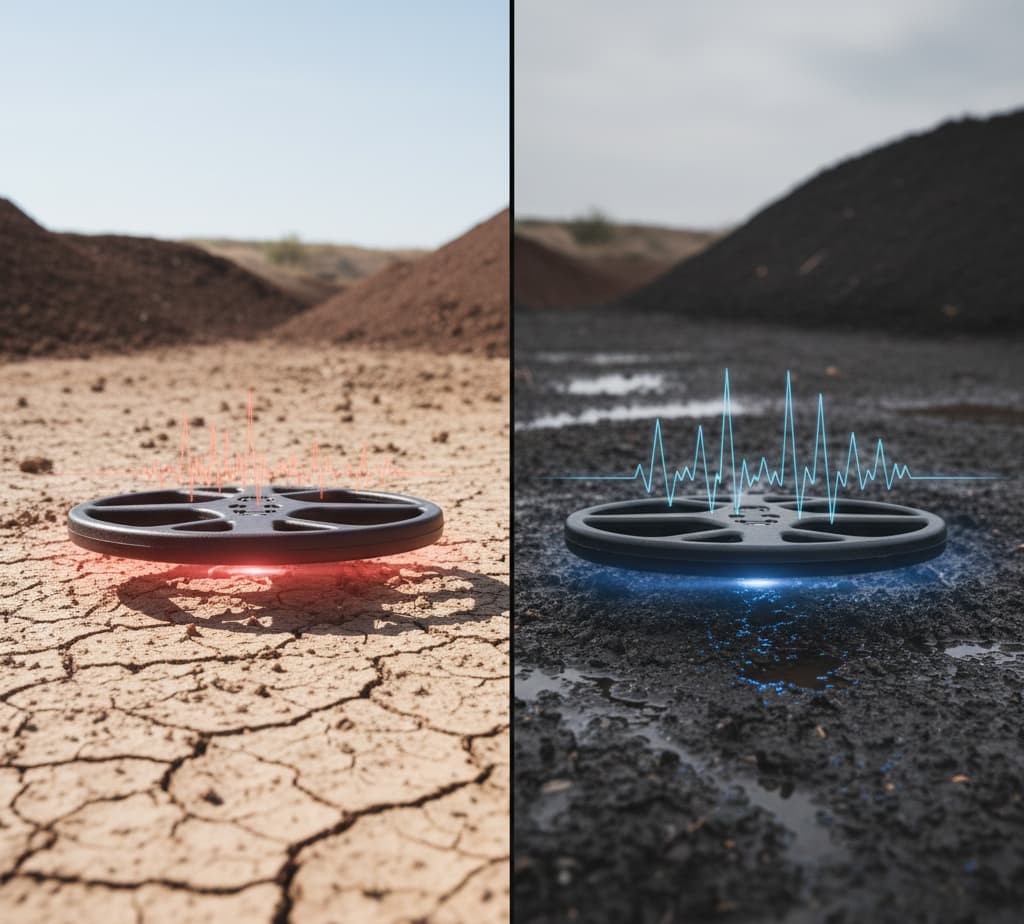
Moisture in the ground can dramatically change how a metal detector performs. Many beginners notice that their detector behaves differently after rain or during dry periods, but they often don’t understand why. The difference between wet and dry ground can directly affect detection depth, signal strength, and overall stability.
Wet ground generally conducts signals better than dry ground. When soil contains moisture, electromagnetic signals can travel more easily, allowing metal detectors to respond more clearly to buried targets. This is why some detectors seem to “go deeper” after rainfall, especially in mild soil with low mineral content. Coins and larger metal objects may produce stronger, more repeatable signals in damp conditions.
However, wet ground is not always better for detecting. In mineralized soil, moisture can actually make things worse. Water can intensify the ground’s natural mineral response, increasing noise and interference. Instead of clearer signals, the detector may become unstable, producing false signals or erratic target identification. This is a common reason why detecting after rain can feel more difficult in certain locations.
Dry ground usually provides more stable signals, but often at the cost of depth. Without moisture, signals do not travel as efficiently through the soil. As a result, deep targets may produce weaker responses or go undetected altogether. Dry, compacted soil can also make it physically harder for targets to settle deeper, which affects what detectors are able to find.
The type of soil plays a major role in how moisture affects detection. Sandy soil and low-mineral ground often benefit from moisture, improving depth and clarity. In contrast, clay-rich or iron-heavy soil may become more challenging when wet, increasing interference rather than improving performance. This explains why detecting conditions can vary so much from one area to another.
Seasonal changes also influence ground moisture. After long dry periods, detection depth may decrease, while during wet seasons detectors may behave more aggressively. Understanding these patterns helps beginners choose the best times and places to detect instead of assuming their equipment is underperforming.
Ground moisture is one of the reasons detection depth is never consistent. A detector that performs well one day may struggle the next simply because the ground conditions have changed. This is why real-world detecting results often differ from advertised depth claims and why experience plays such a big role in success.
Learning how wet and dry ground affect metal detector performance allows beginners to adjust expectations and improve results without changing equipment. Recognizing when moisture helps and when it hurts can prevent frustration and lead to smarter detecting decisions over time.
Saltwater and Beach Conditions
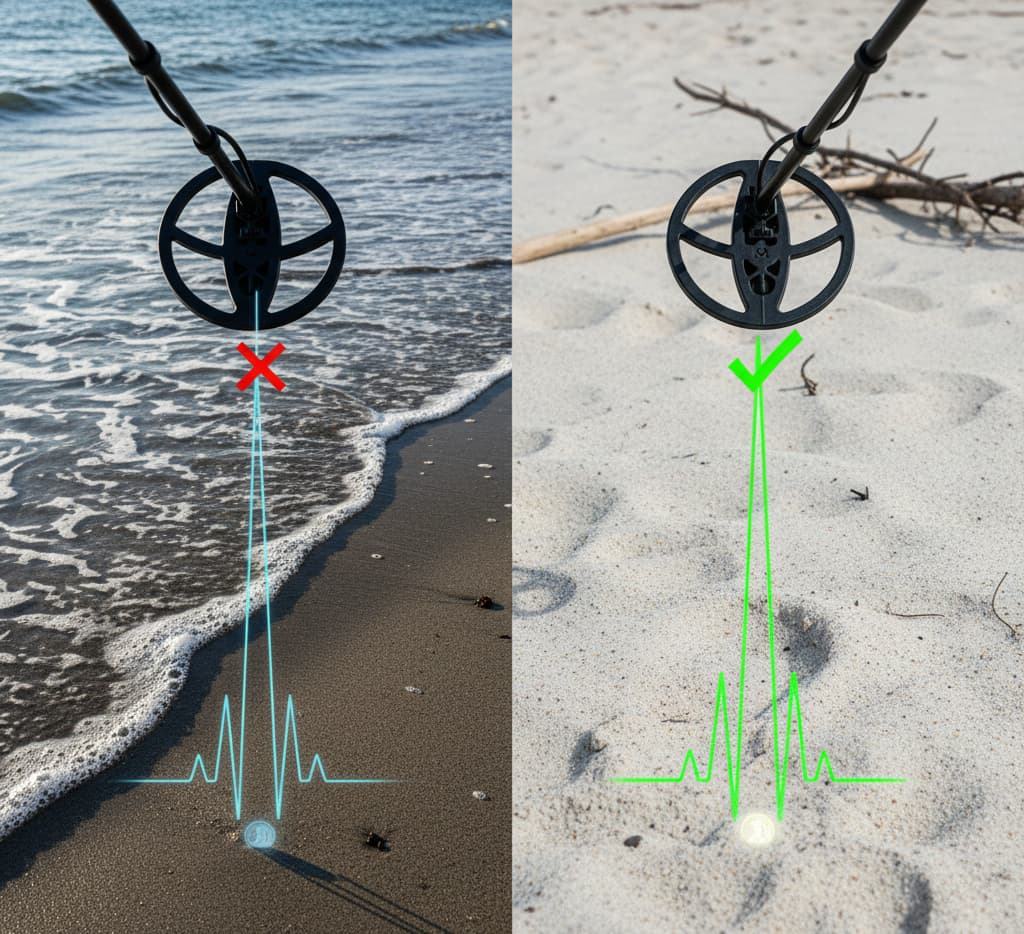
Saltwater environments are among the most difficult places for metal detecting. Many beginners are attracted to beaches because they look open, clean, and full of potential finds, but saltwater creates conditions that can severely limit detection depth and stability. This often leads to frustration and the false belief that the detector is not working properly.
The main problem with saltwater is high conductivity. Salt dissolved in water creates a strong, uniform conductive layer in wet beach sand. Metal detectors are designed to react to changes in electromagnetic fields caused by metal objects, but saltwater produces a signal that closely resembles a metal response. As a result, the detector struggles to distinguish between the ground itself and real targets.
When detecting near the shoreline, wet salt sand constantly sends signals back to the detector. To compensate, many detectors automatically reduce sensitivity or filter out parts of the signal. While this helps control noise, it also reduces detection depth, especially for small or deeply buried targets. Coins and jewelry that would be easy to detect inland may suddenly become faint or invisible.
A common beginner mistake is assuming that wet beach sand behaves the same way as wet soil in parks or fields. Wet salt sand is far more aggressive and disruptive than freshwater ground. Even detectors that perform well in mineralized soil may struggle at the beach if they are not designed to handle salt interference. This is why detecting close to the waterline often produces constant false signals or unstable readings.
Dry beach sand behaves very differently. Once the sand dries, salt interference is greatly reduced. Signals travel more predictably, and detectors can often operate at higher sensitivity levels. This is why many beach finds are made farther from the water, where the ground behaves more like neutral soil and allows for better detection depth.
Beach conditions can also change rapidly. Tides, waves, and moisture levels constantly reshape the detecting environment. An area that performs well in the morning may behave differently later in the day as water moves through the sand. This variability explains why detection depth and stability can change even when using the same detector in the same location.
Saltwater conditions highlight an important truth about metal detecting: depth is always a compromise between sensitivity and stability. In salt-rich environments, detectors often sacrifice depth to maintain usable signals. This is not a flaw—it is a limitation imposed by the ground itself.
Understanding how saltwater affects metal detector performance helps beginners make smarter choices. Knowing where to search, when to detect, and why certain beach areas work better than others can greatly improve results. Instead of chasing unrealistic depth expectations, successful beach detecting relies on understanding ground behavior and adapting to it.
Rocky and Hard Ground
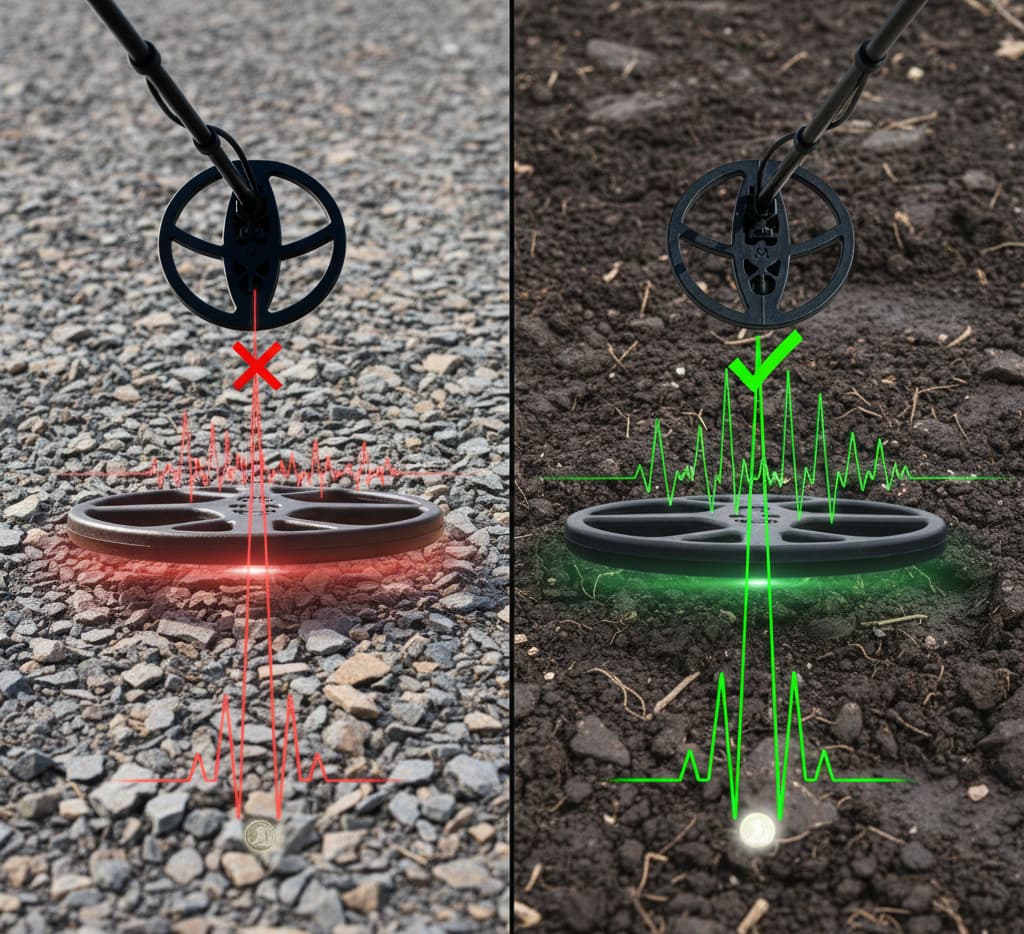
Rocky and hard ground conditions place physical and technical limits on metal detector depth. Unlike soft soil or sand, hard-packed earth and rocky terrain restrict how deeply objects can be buried in the first place. This means that while targets may not be extremely deep, they can still be difficult to detect clearly.
In hard ground, soil density plays a major role. Compacted earth does not allow signals to travel as freely as loose soil. Electromagnetic waves can be disrupted or weakened as they pass through dense material, resulting in reduced signal strength from buried metal. Even large targets can sound faint or inconsistent under these conditions.
Rocky ground introduces another challenge: signal disruption caused by uneven surfaces. Stones and rocks can create air gaps between the search coil and the ground, reducing detection efficiency. When the coil cannot maintain consistent contact with the surface, depth and accuracy suffer. This often leads to broken or jumpy signals that are hard to interpret.
Hot rocks are a common problem in rocky areas. Some stones contain mineral content that produces a response similar to metal. Detectors may signal on these rocks, creating false positives and masking real targets nearby. Beginners often waste time digging rocks instead of actual metal, which can be frustrating and exhausting.
Hard ground also limits sweep control. Smooth, slow coil movement is harder to maintain on uneven terrain. Inconsistent sweep height reduces depth and can cause good targets to disappear after a few passes. This is one reason why detecting in rocky environments feels less predictable than searching in open fields or parks.
Another factor to consider is target orientation. Metal objects trapped between rocks may sit at odd angles, producing weaker or distorted signals. Even shallow targets can be difficult to detect if they are positioned vertically or partially shielded by stones.
Despite these challenges, rocky and hard ground can still be productive. Many historical sites are located in rocky terrain, where objects did not sink deeply over time. The key is understanding that detection depth behaves differently in these environments. Instead of expecting deep targets, success often comes from careful scanning, patience, and paying attention to subtle signals.
Rocky ground clearly demonstrates why metal detector depth is not only about depth itself, but also about signal clarity and consistency. Learning how hard and uneven terrain affects performance helps beginners adjust expectations and improve results without blaming their equipment.
Conclusion
Metal detector depth is not a fixed number. Ground conditions play a major role in how deep targets can realistically be detected, often more than the detector itself. Mineralized soil, moisture levels, and saltwater environments all affect how signals travel through the ground and how clearly a detector can respond.
Understanding how different ground conditions affect detection depth helps beginners set realistic expectations and avoid unnecessary frustration. A detector that performs well in one location may behave very differently in another, even when searching for the same type of target.
By learning how the ground influences metal detector performance, detectorists can make smarter decisions about where to search and what results to expect. Successful detecting comes from adapting to the environment, not from chasing exaggerated depth claims.